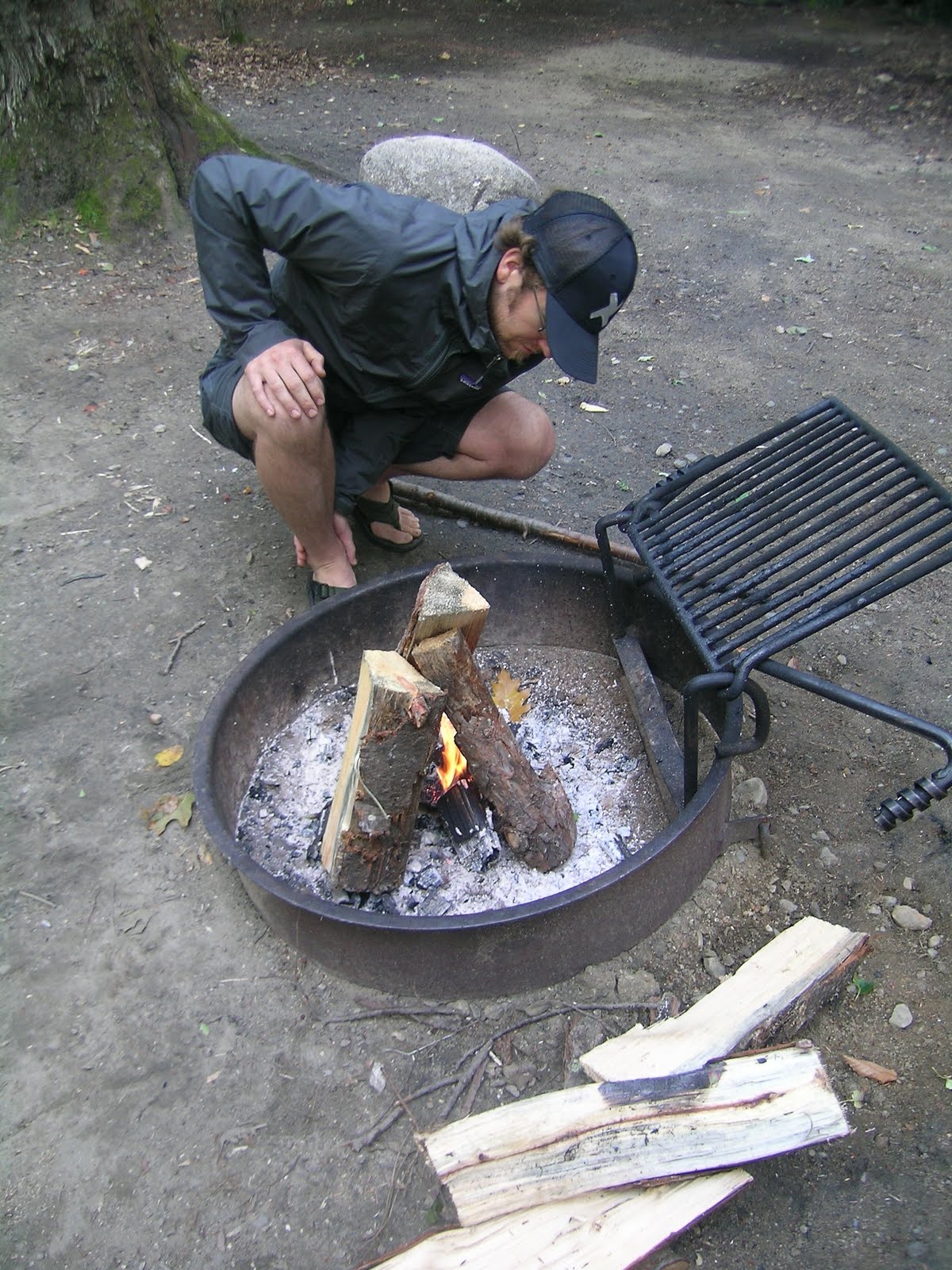
 On our recent trip to Acadia National Park and the White Mountains, Tristan and I perfected the art of cooking on a campfire. There is possibly nothing more enjoyable than a campfire, and cooking on one only increases it's enjoyment. The trick, we found, was Tristan's wonderful idea to start with a base of hot coals. We piled a generous amount of coals in a pyramid, soaked them with lighter fluid, and lit the pile. The initial flames were a light, bright orange and they originated from the top and sides of the pile of coals; these flames would quickly die out. Once these flamed die down, the key is to monitor the pile of coals to be sure that heat is building at the pile's center (several more rounds of lighting may be required to get that heat going). Within about 15-20 minutes, that heat will build to the point that a second round of flaming occurs, but this time the flames come from the center of the coals and are deep red and blue. Once these flames appeared, it was safe to add dry wood. This combination of hot coals and dry wood gave the fire both an intense heat and large enough flames to cook on a grill placed over the fire. The preferred method for cooking was to use foil pouches.
Here are some recipes that we really enjoyed:
Fresh Haddock and Veggies
Ingredients: Fresh vegetables, fresh fish, garlic, 1 lemon, wine (optional), butter (optional), herbs
Tools: tin foil, knife, something to juice a lemon (I used a round tube that was packaging for something else)
- Cut off a large sheet of foil for each individual serving.
- Layer, in the order written, fresh veggies (we used squash and pole beans), haddock filets, slices of lemon and chopped garlic, fresh cherry tomatoes, herbs of your choosing, and maybe a splash of white wine and/or pat of butter onto one half of a large sheet of tin foil for each serving of food. The idea is to layer food in the order of cooking spead: Things that take a longer time to cook, like the squash and beans, should be at the bottom and things that take the least amount of time to cook, like the tomatoes and herbs, are at the top. White fish like haddock takes a shorter amount of time to cook, so it works well in the middle. Firmer fish like swordfish or maybe even salmon may need to be cooked in their own individual pouch, separate from the veggies.
- Fold the sheet of tin foil in half and fold the edges together to create a pouch by folding in an upwards pattern to keep juices contained within the foil pouch.
- Cook directly over the fire until the vegetables are soft and the fish is firm and white.
Fresh Scallops, Shrimp, and Pasta
Ingredients: fresh scallops, fresh uncooked shrimp, pasta, butter, 1 lemon, white wine, garlic, salt, pepper (the pepper is really key for the pasta)
Tools: tin foil, knife, camp stove, 1L pot (for 2 servings of pasta)

- The scallops and shelled shrimp were placed onto one half of a large sheet of tin foil, with each fish on their own tin foil. Each was then topped with a generous amount of butter, garlic, white wine, and fresh lemon juice (disgard the rind). Each piece of tin foil was then folded over the pile of fish into two separate pouches by folding the edges together in an upwards pattern to keep the butter and juices contained.
- Each pouch of fish was placed directly over the fire.
- 1L of water was brought to a boil on the camp stove, to which 2-3 servings of pasta were added. This was cooked until firm, strained, and butter and pepper were added.
- Once the fish is cooked (the shrimp will be bright pink and firm and the scallops will be solid white and firm), pull it off the fire and serve alongside pasta. (The fish can be added to the pasta as well, with a little bit of the cooking juices).

Barbeque Chicken, Asparagus, Potatoes, and Fresh Bread
Ingredients: Chicken breasts (1 per person), potatoes (1 per person), asparagus, butter, soft fresh bread like challah, BBQ sauce.
Tools: tin foil, knife
- Chop the potatoes into 1-inch chunks for easier cooking, leaving the peels on, and trim the ends off of the asparagus by holding each end and pushing the ends towards eachother, causing the asparagus to bend upwards. It will break at the point where the tender tip meets the tougher base. Disgard the base.
- Place each individual type of food onto one half of a large piece of tin foil. Top the chicken with BBQ sauce, add butter to the potatoes and asparagus (the asparagus may steam itself without butter or by adding a little bit of water, but the potatoes absolutely require butter), and wrap the full loaf of bread in foil. Try to keep the potatoes in one layer, rather than piled high (use more than one pouch for the potatoes if necessary). With the butter and placed directly over the flame, this will allow them to brown on one side - yummy!
- Fold each piece of foil in half to encase the food in it's own pouch, with the edges folded upward to hold in cooking juices.
- Place everything directly over a flame, being careful to monitor the potatoes and asparagus. The bread should be placed off to the side a bit and rotated frequently. Don't forget to put the bread upside down to warm the top!
- Cook until the chicken is cooked through, the asparagus is soft, and the potatoes are cooked through and browned on the bottom. Check that the bread is warm. You can also melt butter into the bread in the foil pouch.
These meals served Tristan and I well on our recent camping trip, and they were a long time in the making (we've had some lessons learned!). We hope you try them and enjoy!
Oh, also, a nice addition to any of these meals is fresh corn on the cob. This can be cooked right over the fire by leaving the husks on, which will cause them to flame up and blacken. But inside, the corn is steaming itself with the moisture from the husk. It comes out perfect every time! No need for butter.
Happy trails and campfires!


 Here are a couple of our tried and true favorites. Most of these recipes involve saving your cooking water. You can use a nalgene or aluminum drinking bottle to reserve this water and the water can be used for making hot chocolate, tea, or instant pudding after dinner. And because this is leftover cooking water, it contains carbohydrates and nutrients leached from the food during cooking. Using this leftover water is a good way to get as many of those into your system as possible, since both are in short supply on backpacking trips. Lastly, a wise person turned us on to carrying oil. Adding a tablespoon to each meal adds much-needed fat, calories, and nutrients to your dinner.